 Directions
 Call Us
 Email Us



Key Takeaways
- Arm lift surgery and J-Plasma are distinct procedures for addressing arm contour after weight loss. Arm lifts remove excess skin and J-Plasma tightens skin using energy.
- While arm lift surgery provides instant and impressive outcomes for patients with severe laxity, it requires more extensive incisions and an extended recuperation.
- J-Plasma is appropriate for those with mild to moderate skin laxity and offers a faster recovery and minimal scarring. Several treatments may be required for optimal outcomes.
- Select a treatment based on your skin laxity, desired results, scar tolerance, recovery commitment and cost.
- Each comes with its own set of risks and issues, so it is important to see an expert provider and evaluate whether you are ready for the treatment.
- Skin quality, realistic expectations, and psychological readiness all contribute to our results and satisfaction.
Arm lift vs j-plasma after weight loss
J-plasma is a way to shrink skin without cutting. J-Plasma is a new technique that utilizes cold energy with helium plasma to tighten skin without requiring major incisions.
While both can assist with sagging, their mechanisms, healing, and risks differ. Here’s a straightforward comparison of how each addresses typical concerns.
Foundational Differences
Arm lift surgery and J-Plasma are two fundamental options for recontouring arms post-weight loss. Both address sagging or loose skin, but they do so in different ways and with different results. The table below summarizes the fundamental distinctions.
| Feature | Arm Lift Surgery | J-Plasma Treatment |
|---|---|---|
| Approach | Surgical removal of skin/fat | Energy-based skin tightening |
| Incisions | Large, visible | Small, minimal |
| Skin Laxity Addressed | Severe | Mild to moderate |
| Fat Removal | Yes (with or without lipo) | Limited |
| Recovery Time | Several weeks | Few days to one week |
| Scarring | Noticeable | Minimal |
| Setting | Hospital or clinic | Outpatient, clinic |
| Results | Immediate, dramatic | Gradual, subtle |
The Surgical Solution
Arm lift surgery, known as brachioplasty, provides obvious immediate benefits for patients with ample loose skin. The surgeon excises the loose skin and fat and sculpts the arm contour into a smooth line. This type of surgery is ideal for those who lost significant weight and now observe skin that hangs or droops, even with the arm at rest.
This does more than lift. It can alter the appearance of the upper arm from elbow to armpit, enabling you to sport more form-fitting attire or simply feel more at ease during activity. We’ll throw in liposuction to eliminate any stubborn fat pockets if necessary.
General anesthesia is routine and a few might require hospitalization. The compromise is scar tissue, which might eventually disappear but remains. It can take weeks to heal, and you’ll probably have swelling or bruising during recovery.
In the long run, an arm lift provides enduring enhancement. If weight remains stable, the findings are robust. Skin elasticity is less of an issue because the loose skin is actually removed, not tightened.
The Energy-Based Alternative
J-Plasma uses helium plasma and radiofrequency to heat the skin beneath the surface, rendering it firm and tight. This activation signals the body to produce additional collagen. It’s great for mild to moderate sagging, not for excess skin, but for people looking for a less invasive solution.
| Aspect | J-Plasma | Arm Lift Surgery |
|---|---|---|
| Technology | Helium plasma, radiofrequency | Surgical excision |
| Collagen Stimulation | Yes | No |
| Scarring | Minimal | More visible |
| Recovery | Quicker | Longer |
| Best for | Mild to moderate laxity | Major skin/fat excess |
Sessions are brief. Most receive the therapy in an office, typically with local anesthesia. The cuts are minuscule, only wide enough for a small probe beneath the skin. This results in less pain, less swelling, and a quick rebound to life.
J-Plasma is not for fat removal. If there is excessive fat or very loose skin, it may not provide optimal results. Others might require multiple sessions or use it in conjunction with other treatments.
How to Choose
Deciding on an arm lift versus J-Plasma after weight loss comes down to your goals, skin laxity, scarring, downtime, and budget. Each suits different needs, so aligning the appropriate method to your context is critical.
Here’s a list of factors to weigh:
- Pinpoint the main issue—loose skin, fullness, or both.
- Think about your comfort with scars and downtime.
- Clarify your ideal arm shape and firmness.
- Factor in your daily schedule and recovery time.
- Compare costs and expected long-term value.
1. Skin Laxity
Begin with the loose skin test. If the skin on your upper arms flaps or drapes when you lift them and laxity is moderate to severe, an arm lift typically is the better match, particularly following massive weight loss.
If you’re dealing with a mild to moderate level of sagging or your skin still has some elasticity, J-Plasma can tighten and contour without surgery. The amount your skin is stretched and how well your skin rebounds are important factors.
For those whose primary grievance is flabby excess skin from weight loss, arm lift surgery typically provides optimal results.
2. Desired Outcome
Determine your desires. If you’re after a big transformation, such as the elimination of significant excess skin, reshaping, or a more balanced arm, an arm lift delivers a stronger outcome.
J-Plasma works great if you simply want to tighten and smooth the arm, not trim away skin. If fat removal is required, neither option is perfect on its own. A hybrid with liposuction is sometimes optimum.
Determine how critical a firm, smooth arm with tight skin is to your self-image and lifestyle.
3. Scar Tolerance
Arm lifts result in larger scars, typically from armpit to elbow. Some are okay with this if it means firmer arms, others aren’t.
J-Plasma leaves just tiny pinhole marks that diminish with time. We cope differently; some wounds seal up quickly while others remain fresh or open longer. Utilizing compression and adhering to wound care assists.
If scar avoidance is your number one priority, J-Plasma is safer.
4. Recovery Commitment
Arm lifts require more rest, sometimes weeks away from work. You’ll put on compression sleeves and have to take it easy.
J-Plasma heals quicker, with many back to normal within days. If your schedule is full or you can’t manage extended downtime, J-Plasma provides a more gentle route.
Both require that you adhere to care plans for optimal outcomes.
5. Cost and Value
Arm lifts are more expensive initially, with greater surgical and care charges. J-Plasma could be less expensive per session, but occasionally requires multiple treatments.
Insurance rarely covers either unless part of a bigger procedure. Compare the upfront expense of a lift versus potential J-Plasma re-dos.
The Recovery Journey
To recover well from an arm lift or J-Plasma post-weight loss, you need to plan for downtime and understand what to expect. Everyone’s recovery journey is unique. The stages and nursing advice are concise. Handling your recovery properly reduces complications, alleviates pain, and makes your outcome better in the long run.
Steps for Managing the Recovery Process:
- Try to sleep as much as possible the first couple of days.
- Wear compression garments as instructed.
- Keep the area clean and dry.
- Avoid heavy lifting or strenuous activity until cleared.
- Attend all follow-up appointments with your care provider.
- Use prescribed medications or creams for swelling or pain.
- Seek assistance from friends or family during those initial days.
- Be vigilant for infection or complications and report them quickly.
- Follow skin care guidelines provided by your surgeon.
- Keep yourself well hydrated and eat well to fuel the healing process.
Routine check-ups allow physicians to detect problems as early as possible. These visits assist in monitoring healing and provide an opportunity to inquire about updates or concerns.
Arm Lift Healing
Arm lift recovery has distinct phases. Swelling and bruising in the first week are to be expected. Your arms may be tight or sore. Side effects typically subside in 2 to 3 weeks. That’s when scar maturation begins. Scars appear red in the beginning and then fade over the course of months to a year.
Compression garments assist by minimizing swelling and supporting tissue. They’re to be worn day and night for a minimum of two weeks, at times more. Surgeons might advise keeping them on until swelling subsides and the new arm contour sets.
Physical activity has to return gradually. Light movement begins after several days, but intense lifting or aggressive workouts are left until after the doctor gives the thumbs up. If you push too soon, you risk slowing your healing or creating complications.
Recovery is not just physical. Emotional support matters. Sharing with friends or a support group reduces stress and maintains your motivation during your recovery.
J-Plasma Recovery
J-Plasma recovery tends to be very smooth and fast. Almost everyone experiences some initial swelling, redness, or tightness. These side effects disappear in days or weeks. Patients lay low for 48 to 72 hours, then begin light activities within a couple of days.
Downtime is way less than with surgery. Most are back to full routines within a week or less. It is comforting to have someone around for the first day for the daily requirements.
Skin will continue to tighten for three to six months as collagen forms. After-care, including moisturizing, sun protection, and gentle cleansing, makes results last. Others experience continued progress for years.
Fast healing and minor side effects lead to greater satisfaction for a lot of people. Visible effects are immediate, but optimal transformations require fortitude as the skin tightens up.
Results and Longevity
Arm lift surgery has been a traditional solution to loose skin after losing weight, and J-Plasma offers a new, less invasive alternative. Both have different results, longevity and maintenance.
Visual Outcomes
Arm lift surgery can eliminate these large folds, producing a significantly firmer, more elegant arm contour. This is typically most pronounced in individuals with massive weight loss, as the lift can address more severe sagging. The transformation is frequently instant, with the ultimate impact observed as swelling subsides months later.
J-Plasma tightens without excising skin. The results look more subtle, providing a natural lift and a bit of smoothing as opposed to a drastic transformation. For mild to moderate saggers, this may be sufficient.
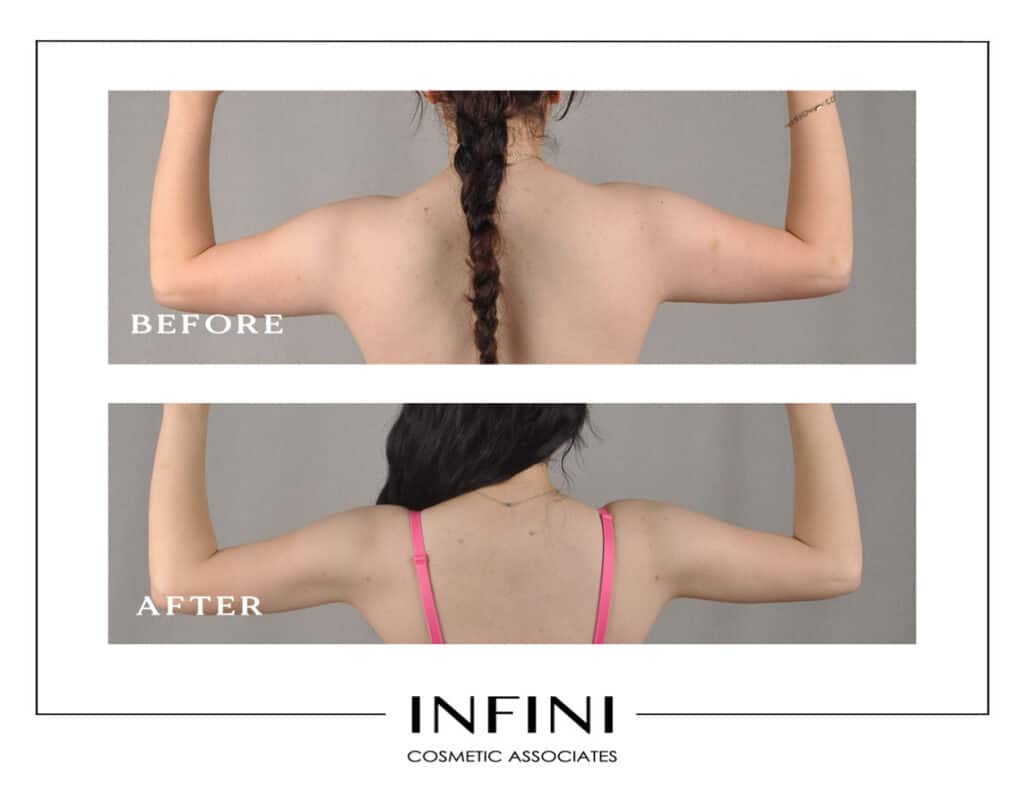
Anatomy is a big factor. If the skin is thin or poor in elasticity, none of this can magically create the illusion of naturally tight and youthful arms. Thicker, more elastic skin tends to respond most, especially to J-Plasma.
Before-after pics set expectations. Arm lift photos exhibit dramatic shifts, whereas J-Plasma results appear more modest yet still significant, resembling a firmer, more toned appearance.
We need to remain realistic about what each can offer. Some individuals hear friends commenting that they look “10 years younger,” but results vary. The best results tend to occur when goals align with what is achievable given your skin type and starting point.
Lasting Effects
Arm lift surgery usually provides long-lasting results. Once you cut that skin away, it’s not coming back unless you have serious weight gain or loss post-op. Most individuals notice their optimal outcomes between three to six months, with the ultimate appearance solidifying near the nine-month mark.
These are largely permanent improvements over time, with many experiencing sustained benefits for five years or more.
J-Plasma patients experience an immediate 30 to 50 percent tightening post-treatment. Collagen continues to build for six months, so skin remains smoother and firmer. Results can last as long as eight years, although some individuals require touch-up treatments, particularly if their skin tends to thin as they age.
Research demonstrates that 20 to 25 percent of the fat loss can remain even five years later.
Lifestyle does matter. Big swings in weight can stretch skin again, potentially erasing results with either approach. Maintaining a stable weight, eating a healthy diet, and avoiding smoking all contribute to making the results last longer.
As we age, skin loses firmness naturally, so some softening will occur regardless of the treatment.
Potential Complications
While both arm lift surgery and J-Plasma provide fixes to the loose skin that can occur following weight loss, they come with their own risks and side effects. By being aware of these potential complications, readers can make an informed decision.
Surgical Risks
Arm lift surgery, as an invasive procedure, includes the usual surgical hazards. Infection, bleeding, and scarring are the three most common complications. Scarring is inevitable and can be disfiguring for the keloid or thick scar-inclined patient.
Bleeding, while less common, can result in a hematoma, which necessitates additional intervention if it is not treated promptly. Underpinning conditions such as diabetes or circulatory issues can increase the risk for infection and impede healing.
Different surgical techniques, for example, how much skin is removed or where incisions are placed, can impact how much bruising or swelling you experience. These are generally mild and tend to dissipate after a few weeks, but an individual may experience persistent swelling or even a small infection if they don’t observe aftercare instructions.
The experience and skill of the surgeon matter a lot. Experienced surgeons utilize sterile procedures and precise suturing, which minimize infection and improper healing. Surgeon choice cannot be hastened.
An experienced arm lift surgeon with a history of successful procedures reduces risk to the patient. When complications occur, longer recoveries are typical. Others require additional weeks prior to resuming their regular activity, particularly if swelling or pain lingers.
Device-Related Risks
J-Plasma is less invasive but not without potential complications. The treatment relies on cold plasma energy to tighten skin, but if the device is misused, it can cause burns or uneven texture. Device malfunction, albeit rare, can lead to patchy effects or additional swelling.
Bruising and swelling are par for the course and can persist for days or even weeks, but typically resolve without intervention. Patient selection is key here. Individuals with thin skin, medical issues, or unrealistic expectations are at risk of bad results.
Safety is best achieved by utilizing FDA-approved devices and regulated protocols. Undertrained providers might misapply the device, increasing the risk of complications. Most side effects, like mild redness or swelling, are short-lived.
With satisfaction rates upward of 90% in certain reports, it’s clear that these serious complications are rather uncommon. Quicker recuperation is one key appeal of J-Plasma. Most folks return to normal, daily life within a few days.
However, some individuals may require additional rest, particularly if swelling persists. Aftercare is still key. Keeping the area clean, moisturized, and not lifting anything heavy for at least three weeks reduces complications. Mild infection, while not typical, can occur if the site is not maintained clean.
The Hidden Factors
So when you’re deciding between an arm lift and J-Plasma after weight loss, you’re looking beyond surface-level benefits. The correct selection is contingent on underlying factors such as skin texture, potential complementary therapies, and personal readiness for the journey, both mentally and emotionally. Results can vary significantly depending on these specifics, so it’s best to have the complete context before deciding.
Skin Quality
Skin quality is a major determinant of success for either procedure. Skin that’s elastic and smooth heals better with J-Plasma because it depends on the skin contracting and forming new collagen. Those with mild sagging and healthy skin experience results within the first week or two, with firmer skin becoming apparent after six weeks.
Collagen continues to accumulate for three to six months, which helps skin appear even tighter and smoother as time passes. If you have bad elasticity, heavy stretch marks, or thin skin, J-Plasma alone will be less effective. An arm lift cuts out extra skin outright, so it’s great for folks with substantial sagging or hanging folds that won’t taut up naturally.
Healing and end results are dependent on what kind of skin you came in with and the healthier your skin, the less complicated and better-looking the scar. Pre-treatment skin care is important. Moisturizers, hydration, and maintaining a stable weight for at least six months encourage the skin to heal itself and look great again after either procedure.
Skin continues to tighten for months and approximately 20 to 25 percent fat reduction can last up to 5 years, particularly when skin is treated pre- and post-care.
Combination Therapy
- Combination therapy utilizes both arm lift and J-Plasma to tackle multiple concerns simultaneously. The arm lift eliminates significant excess skin, and J-Plasma tightens the skin that is still present and stimulates collagen for a more refined outcome. This technique can create a more organic appearance and reduce the chances of patchy skin or residual sagging.
- Tackling both loose skin and hard fat together means fewer result gaps. For instance, one mildly sagging but stubborn pocket of fat might benefit from both at the same time.
- Folks tend to be happier with combination therapy since it addresses multiple issues and has the potential to accelerate recovery time. Many feel some tightening within 2 weeks and the majority return to light activities in a matter of days.
- A good plastic surgeon’s advice is vital. They can make a plan customized to each person’s skin type, objectives, and lifestyle, making sure the selected methods are right for the person.
Psychological Readiness
Body contouring following significant weight loss is not simply a physical transformation. Many of you are dealing with mixed emotions — pride in your journey and nerves about surgery and recovery. Being mentally prepared can impact not only how you recover but how satisfied you feel with the outcome.
Those who are mentally prepared cope with swelling, pain and the extended wait for results, often more than six months, much better. It’s important to have realistic expectations. No one is going to notice “perfect” arms, and it takes a while to demonstrate results.
Support from friends, family, or counseling helps keep motivation up during recovery, especially when setbacks or doubts arise.
Conclusion
Both arm lift and J-Plasma provide tangible solutions to correct loose skin post weight loss. Arm lift excises loose skin for a dramatic, rapid transformation. J-Plasma tightens skin with less downtime and no big scars. Every route carries its own dangers and rewards. Some want a quick fix, some want less pain. Doctors examine your skin, health, and goals to assist you in making a choice. They are long-lasting if you maintain a consistent weight. Both require attention and time to look their best. To find what suits your story, consult with a board-certified physician. Got questions? Want to share your hopes? Get advice that fits your needs. Your next step can create real transformation.
Frequently Asked Questions
What is the main difference between an arm lift and J-Plasma after weight loss?
Arm lift removes excess skin and fat surgically. J-Plasma utilizes cold plasma energy to tighten skin without large incisions. Both seek to enhance arm aesthetics. The methods and recuperation periods vary.
Who is a good candidate for an arm lift after weight loss?
Optimal candidates have serious loose skin on the upper arms that cannot be improved with exercise. They must be healthy and at a stable weight. Consultation with a skilled surgeon is key.
Is J-Plasma less invasive than an arm lift?
Yes. J-Plasma is less invasive and typically performed through small incisions. It tightens skin with less downtime and smaller scars than a traditional arm lift.
How long does recovery take for each procedure?
Arm lift recovery generally lasts two to four weeks. J-Plasma recovery is shorter, sometimes only a few days to a week. For best results, always follow your doctor’s aftercare instructions.
Are the results of J-Plasma permanent?
J-Plasma is long-lasting too, if you stay in shape. Results might not be as dramatic or permanent as an arm lift for severe skin laxity.
What are the potential risks of each treatment?
Arm lifts can leave scars, infection, or swelling. J-Plasma risks include skin burns, irregular outcomes, or infection. Either way, they should be done by experienced physicians to reduce complications.
How do I decide which treatment is right for me?
It depends on your skin, your desired outcome and your recovery preference. Talk to a board certified plastic surgeon about your goals and concerns for a customized recommendation.
